Tag: ArabVoices

  • Our Middle Name Was Never Ours

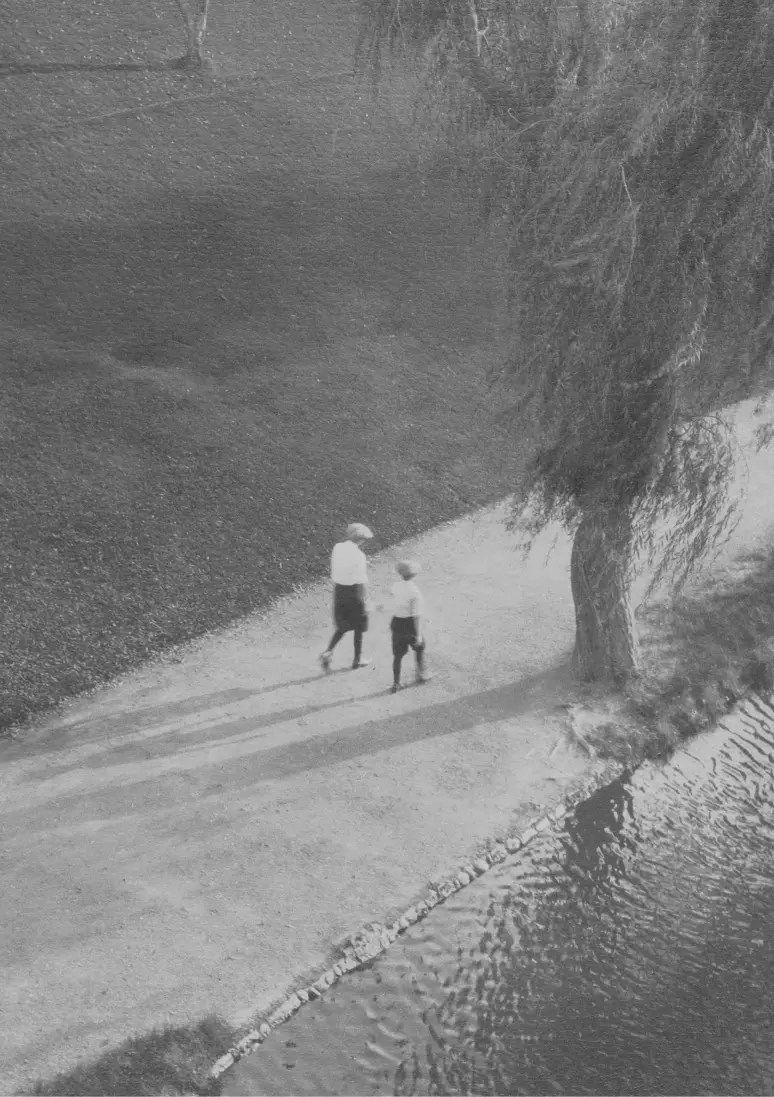
    Black and white photo focusing on a woman and a child from afar.

    Our middle name isn’t a name.
    It’s a chain.
    A line of men, our father, his father, and the one before him,
    stitched into our identity like a family tree with no branches for women.

    In much of the Arab world, we don’t inherit our mothers’ names.
    Not their first. Not their last. Not even a letter of them.
    We carry our father’s name as our middle, and his father’s as our last.
    A lineage of men.
    Unbroken. Unquestioned. Unfair.

    Growing up, we never thought to ask why.
    It was just how things were.
    When someone read our name out loud, we nodded.
    Even when it felt foreign to us,
    not just in pronunciation, but in ownership.

    Because no one ever said our mothers’ names in public.
    Not at school. Not at church. Not at family gatherings.
    It was private. Sometimes even shameful,
    as if protecting her meant erasing her.

    And yet, when our names were spoken,
    we felt the absence of her.
    The silence where she should’ve been.

    Some assume this naming system is religious.
    But it’s not.
    It’s not just Islamic. Not just Christian.
    It’s cultural.
    A regional tradition upheld across faiths,
    woven deep into our systems, stories, and expectations.
    A patriarchy disguised as respect.

    A system that traces a woman’s identity through the men in her life,
    first her father, then her husband, maybe her son.
    A system that says:
    You belong to him. Then to him. And never fully to yourself.

    Yes, the West has its own problems.
    Women still taking their husband’s names by default.
    Pressure to erase your identity for love.
    But at least the conversation exists.
    At least some people question it.

    In many Arab households, this naming system is sacred.
    To challenge it is to challenge tradition,
    which often feels like challenging loyalty.
    Family. Faith. God.

    But what if asking these questions isn’t betrayal,
    but healing?

    What if honoring our mothers doesn’t dishonor our fathers?
    What if lineage doesn’t have to be one-sided to be strong?
    What if we want to carry our mothers’ names too,
    not in secret, but in full voice?

    They raised us.
    They stayed up through our fevers.
    They taught us how to be soft and brave in the same breath.
    They held our fears when we didn’t have words.

    And yet, when our names are written on paper,
    they disappear.

    Maybe we’re not just asking to say their names out loud.
    Maybe we’re asking to write them into the record,
    onto birth certificates, identity cards, passports.
    Not as an exception, but as a right.

    Maybe we’re ready to question not just tradition,
    but the systems that keep it unquestioned.

    Because this isn’t just about memory,
    it’s about visibility.
    Dignity.
    Change.

  • Virginity Isn’t a Choice. It’s a Chain.

    They chained our dignity to a membrane, and called it honour.

    In much of the Arab world, virginity is not private.
    It is not intimate.
    It is not yours.

    It belongs to everyone but you
    your family, your tribe, your community.
    Guarded. Weighed. Judged.
    Your body becomes a ledger of their honour.

    For men, there is no ledger.
    No hymen. No proof demanded.
    They roam. They conquer.
    They laugh in cafés, smoke in rooms,
    their bodies untouched by consequence.
    Their stories never stain a name.
    Their flesh is theirs alone.

    But for women, virginity is life or death.
    If you are not a virgin on your wedding day,
    you risk your life, your honour, your family’s name.
    A wedding night without blood on the sheets
    a whisper in the marketplace
    a rumor in the wrong ears
    and shame is not a feeling.
    It is a verdict.

    Some call this sacred.
    Some cloak it in words like honour, protection, faith.
    But peel back the layers and you see the truth:
    Power.
    Held by men.
    Pressed against women.

    It is not God.
    It is not morality.
    It is control.
    Who gets to live freely.
    Who must walk in fear.

    The double standard is savage.
    A man’s mistakes make him worldly.
    A woman’s desires make her disposable.
    He is forgiven.
    She is erased.

    Yes, the West has its own chains
    slut-shaming, purity culture, whispered judgment.
    But at least there is dialogue.
    At least the question, why?, can be asked.

    In Arab households, silence is deeper.
    Questions are dangerous.
    To challenge virginity as honour
    is to challenge family, tradition, God Himself.
    So most women swallow the fear.
    Some are forced to navigate the impossible:
    turning to anal sex to avoid “losing” their virginity,
    because there is no evidence, no proof, but the fear, the pressure, the judgment, remains.
    They wear the chain. Carry the shame.

    But silence is not safety.
    Obedience is not dignity.

    What if virginity were not currency?
    What if honour were not measured in hymens?
    What if women’s lives were valued for humanity, not restraint?

    These questions are not betrayal.
    They are survival.
    They are love, for our mothers, our sisters, our daughters
    who deserve more than a life defined by what they have not done.

    Virginity is not sacred.
    Women are.