Tag: arab

  • Unfiltered: Islam and the Obsession With Sex

    A Muslim Woman Speaks

    I was told that Islam is justice.
    I was told that Islam is mercy.
    I was told that Islam honours me.

    Yet, when I look around, I see something deeply unsettling. The shadow of sex looms large, not just as a private matter, but as the very framework that shapes how women are viewed and valued.

    From the Prophet’s marriages to the promise of virgins in paradise, from the veil that hides my hair to the silence I am expected to maintain, sex defines the contours of my existence. It’s not merely about desire; it feels like a prescription for how I should live, how I should be seen, and how I must navigate this world.

    The Prophet, held as the paragon of morality, had 44 wives, some very young. His actions are defended as “appropriate for the time,” yet they continue to shape expectations today. I find myself wondering: Was this divine wisdom, or simply human desire inscribed within the sacred?

    And what of paradise? For muslim men, the promise is virgins, untouched and eternally pleasing. For women, the reward is their husbands. Is this truly paradise? Where is the equality in this vision of the afterlife? Why, even in the hereafter, are we defined not by what we might receive, but by what we give?

    Here, in the world we inhabit, my body is treated as something to be controlled. Cover your hair, because men might look. Lower your voice, because men might desire. Walk softly, speak gently, because the discomfort of others must always be guarded. I cannot escape the realisation: I am asked to shrink, not out of devotion, but for the sake of others’ control over their impulses.

    We are told that Islam elevates women, but the truth often feels far different. Our worth remains tied to our virginity, our submission, and our ability to regulate the desires of others. What is presented as dignity feels like restraint. What is called justice tastes like inequality.

    I am Muslim, and I am a woman.
    I am more than a veil.
    I am more than a virgin.
    I am more than a vessel.

    I choose a life free from these confines. I will not allow my worth to be defined by the desires of others, nor will I let their discomfort dictate my presence. My body is not a battleground. My soul is not a possession.

    To question is not rebellion; it is the pulse of life.
    To reflect is not defiance; it is clarity.
    And if we cannot question, if we cannot reflect, are we truly living?
  • Is America Learning from Middle Eastern Dictators? A Crash Course in Authoritarianism

    I didn’t grow up in a dictatorship in theory.
    I lived it.
    I remember what it felt like when elections meant nothing.
    When the news was a lie.
    When questioning authority could land you in prison, or worse.
    When people didn’t “disagree with the government.”
    They shut their mouths and survived.

    I’m telling you this because what I’m seeing in the United States now feels… familiar.
    Too familiar.

    You think it can’t happen here.
    You think this country is too “free,” too “developed,” too “exceptional” to slide into authoritarianism.

    That’s exactly what we thought.

    Dictatorship doesn’t show up overnight.
    It doesn’t march in with tanks and military parades.
    It creeps in, through language, through laws, through fear.

    It starts with excuses:
    To censor.
    To surveil.
    To punish.

    In the country I came from, it started with “security.”
    There was always some enemy to fear.
    First it was terrorists.
    Then it was activists.
    Then it was journalists.
    Then it was ordinary people.
    One by one, our freedoms vanished, always justified, always wrapped in patriotism.

    Eventually, no one talked politics out loud.
    You learned to look over your shoulder before speaking.
    You smiled when you were scared.
    You learned that silence was safer than honesty.
    You stopped asking questions.

    So when I scroll through American news, when I hear people call the press “the enemy,” or see protesters labeled “domestic threats”, I don’t feel surprised.
    I feel sick.

    Because I’ve seen how this plays out.

    Back home, people worked endless hours and paid their taxes like everyone else, but the money didn’t go to schools or hospitals.
    It went to armored trucks.
    Spy networks.
    Tear gas.
    And palaces, presidential, royal, military, take your pick.
    The rich got richer.
    The rest of us got quiet.

    And now, here in America, what do I see?
    Cities patrolled like war zones.
    Surveillance disguised as “safety.”
    Education gutted while defense budgets balloon.
    People going bankrupt just to stay alive.
    And still, somehow, being told they should feel lucky.

    That’s not freedom.
    That’s what control looks like, right before it becomes total.

    In a dictatorship, the government doesn’t need to kill you to win.
    It just needs you to stop believing that anything can change.

    Eventually, that’s what happened to us.

    People didn’t stop fighting back because they agreed.
    They stopped because they were exhausted.
    Because nothing worked.
    Because every protest led to arrests.
    Every vote was rigged.
    Every voice was a risk.

    And because we were tired.
    Tired from working jobs that barely paid enough to eat.
    Tired from getting sick and not being able to afford care.
    Tired from watching our parents, our neighbours, ourselves, fall apart, physically, mentally, financially.

    You don’t think about politics when you’re drowning in debt.
    You don’t plan for the future when you can’t afford medicine.
    You stop organising. You stop hoping.
    You think about survival… and nothing else.

    That’s how they win.

    And I see that same exhaustion here now.
    People crushed by medical bills, rent hikes, job losses, and burnout.
    People too overwhelmed to fight back, not because they don’t care, but because they’re running on empty.

    And that’s the plan.
    That’s always the plan.

    You don’t wake up one day in a dictatorship.
    You wake up in a country that looks just like yesterday
    Except a little colder.
    A little quieter.
    A little more afraid.

    And one day, you realize:
    The fear is permanent.
    The silence is normal.
    And the freedom you thought was guaranteed is gone, not with a bang, but with a shrug.

    So what’s next?

    If it goes further, and I believe it can, there will be a moment when everything just… stops.
    Martial law will be declared.
    You won’t be allowed to vote.
    The courts will no longer function the way you know them.
    There will be no process left to appeal to.
    And we’ll be stuck.
    Trapped in a system that no longer needs your permission, your participation, or your voice.

    And the irony?

    America once claimed to be “bringing freedom” to places like mine.

    But it wasn’t exporting democracy.
    It was learning how authoritarianism works.
    And now?
    It’s using the playbook, line by line.

    You think this is alarmist.
    You think this is overblown.

    That’s what we thought, too.

    Until it was too late……….

    ….. You didn’t liberate us.
    But you may have imported the very oppression you claimed to fight.

    So if you’re not scared yet, you should be.

    Because what’s coming won’t feel new.
    It will feel familiar.
    To people like me.

    And by then, it won’t be a warning anymore.
    It’ll be a memory —
    Yours.

  • Polygamy: Lust Disguised as Devotion

    I was born and raised Muslim.
    I know the prayers whispered before sleep,
    the rhythm of fasting,
    the rules that pressed against my skin like a second layer of clothing.
    But knowing does not mean obeying without question.
    Faith is not silence.
    Devotion is not surrender of thought.
    And I will not pretend that every verse, every practice, is sacred simply because most Arab men, and even women, defend it.

    Polygamy.
    That word is dressed in holiness, wrapped in God’s name, and paraded as if it were a gift.
    But beneath the veil, it is nothing more than a system upheld by most Arab men,
    to serve most Arab men,
    to gratify their penis while women are told to bow and call it divine.

    They speak with pride of the Prophet’s many wives
    forty-four, maybe MORE, who fucking knows… some heartbreakingly young.
    They boast.
    They defend.
    They glorify.
    And when unease rises, they soothe themselves with excuses:
    It was a different time. It was for the protection of women. It was political.
    But peel away the layers and the truth is simple:
    it was about power, raw lust, and domination.

    And here is the question that burns:
    If Islam claims to complete what came before,
    to follow the thread of Christianity and Judaism,
    then why did none of the previous prophets, Noah, Abraham, Moses, or even Jesus, practice this, even though they lived in far harsher, more brutal times?
    If this faith was truly about progression,
    why cling to a practice that reduces women to vessels and is defended and glorified by most Arab men, even if they themselves never practice it?
    The answer is not divine.
    It is human.
    It is most Arab men.
    It is lust, RAW lust, disguised as law.

    Religion became the mask.
    Desire was the driver.
    And women were the price.

    Even today the echo is loud.
    Most Arab men defend polygamy,
    they glorify it,
    they excuse it
    the belief that their penis, their urges, are too mighty to restrain,
    too holy to deny.
    So the system bends,
    always bending to accommodate most Arab men,
    while most women break under its weight, brainwashed to think it’s a man’s God-given right.

    This is not faith.
    This is not holy.
    This is patriarchy stitched into scripture,
    asking us to bow to desire and call it God.

    I was born and raised Muslim.
    I know its rules,
    its demands,
    its silences.
    But I will not accept everything placed in my hands as sacred.
    To question is not betrayal.
    To refuse is not sin.
    And until we name polygamy for what it is
    a system defended by most Arab men to feed their lust while masking domination as devotion
    women will keep paying the price for most Arab men’s pride.

  • Your Body Was Never the Problem جَسَدُكِ مِش عَيْب

    From the moment an Arab girl’s body begins to change, she is put on trial.

    Not for what she’s done, but for daring to exist.

    The rules arrive like verdicts:

    “Cover up properly.”
    “Sit up straight.”
    “It’s shameful to laugh like that.”
    “Lower your gaze.”
    “Don’t talk about such things.”

    اِلبِسِي مِنِّيح
    اِقعُدِي عَدِل
    عَيْب تِضْحَكِي هِيك
    غِضِّي بَصَرِك
    لا تِفْتَحِي هِيك مَوَاضِيع

    They call it protection.
    They call it religion.
    They call it love.

    But what it really is, is control.
    A cage built with shame.
    A system designed to keep us small, obedient, afraid.

    Afraid of being seen.
    Afraid of being wanted.
    Afraid of wanting.

    This is how a girl’s body is turned into a crime scene before it ever becomes her own.
    Desire becomes dangerous.
    Curiosity becomes corruption.
    Sexuality becomes sin.

    And so we learn to erase ourselves.
    Not just our skin, but our hunger.
    Not just our questions, but our joy.
    We learn to carry the burden of everyone else’s shame.

    But shame is not sacred.
    And silence is not protection.
    Silence is disappearance.

    And we’ve disappeared enough.

    Our mothers were taught to endure.
    We were taught to endure.

    But endurance is not freedom.
    Obedience is not virtue.
    Fear is not faith.

    So what if we are done enduring?

    What if we say, without apology:
    I choose.
    I want.
    I am.

    Not rebellion, reclamation.

    Because our bodies were never dangerous.
    What’s dangerous is a woman who knows her body is hers.
    A woman who no longer folds herself to fit the smallness of others.
    A woman who refuses to make her existence conditional.

    So let’s stop folding.

    Say it, in Arabic, in English, in the language of every woman who’s been told her body is shame:

    My body is not your honour.
    My voice is not your threat.
    My existence is not your permission to grant.

    We will not whisper.
    We will not bow.
    We will roar.

  • Our Middle Name Was Never Ours

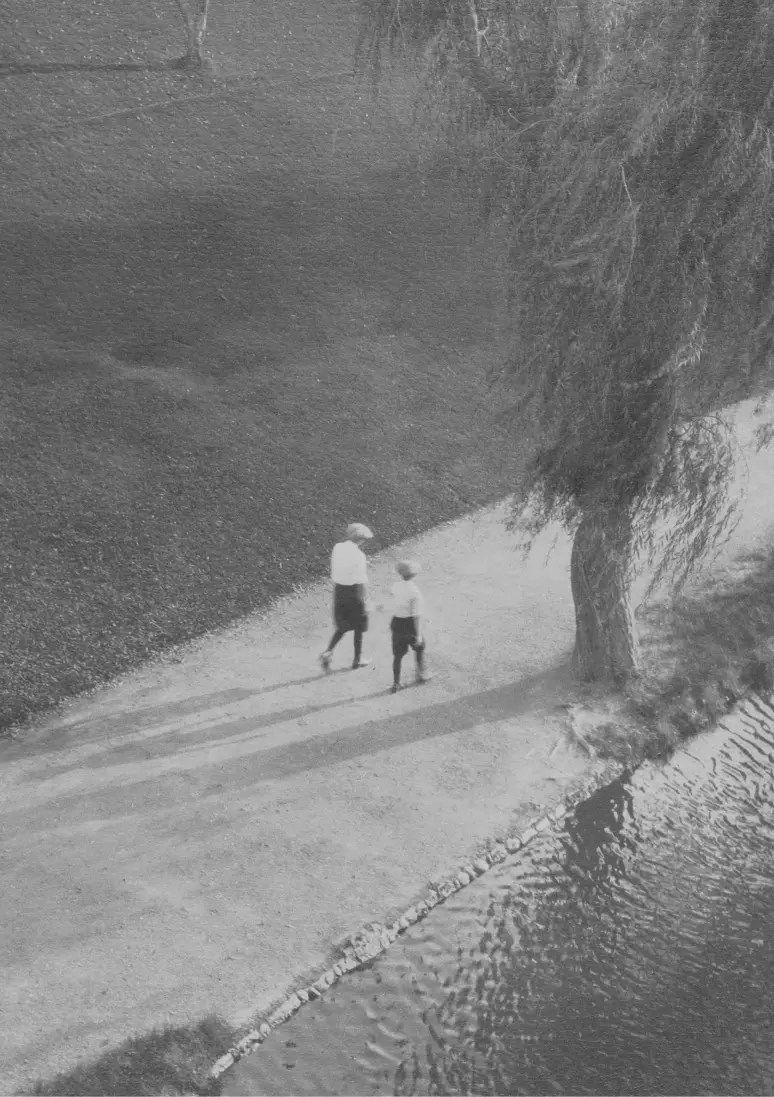
    Black and white photo focusing on a woman and a child from afar.

    Our middle name isn’t a name.
    It’s a chain.
    A line of men, our father, his father, and the one before him,
    stitched into our identity like a family tree with no branches for women.

    In much of the Arab world, we don’t inherit our mothers’ names.
    Not their first. Not their last. Not even a letter of them.
    We carry our father’s name as our middle, and his father’s as our last.
    A lineage of men.
    Unbroken. Unquestioned. Unfair.

    Growing up, we never thought to ask why.
    It was just how things were.
    When someone read our name out loud, we nodded.
    Even when it felt foreign to us,
    not just in pronunciation, but in ownership.

    Because no one ever said our mothers’ names in public.
    Not at school. Not at church. Not at family gatherings.
    It was private. Sometimes even shameful,
    as if protecting her meant erasing her.

    And yet, when our names were spoken,
    we felt the absence of her.
    The silence where she should’ve been.

    Some assume this naming system is religious.
    But it’s not.
    It’s not just Islamic. Not just Christian.
    It’s cultural.
    A regional tradition upheld across faiths,
    woven deep into our systems, stories, and expectations.
    A patriarchy disguised as respect.

    A system that traces a woman’s identity through the men in her life,
    first her father, then her husband, maybe her son.
    A system that says:
    You belong to him. Then to him. And never fully to yourself.

    Yes, the West has its own problems.
    Women still taking their husband’s names by default.
    Pressure to erase your identity for love.
    But at least the conversation exists.
    At least some people question it.

    In many Arab households, this naming system is sacred.
    To challenge it is to challenge tradition,
    which often feels like challenging loyalty.
    Family. Faith. God.

    But what if asking these questions isn’t betrayal,
    but healing?

    What if honoring our mothers doesn’t dishonor our fathers?
    What if lineage doesn’t have to be one-sided to be strong?
    What if we want to carry our mothers’ names too,
    not in secret, but in full voice?

    They raised us.
    They stayed up through our fevers.
    They taught us how to be soft and brave in the same breath.
    They held our fears when we didn’t have words.

    And yet, when our names are written on paper,
    they disappear.

    Maybe we’re not just asking to say their names out loud.
    Maybe we’re asking to write them into the record,
    onto birth certificates, identity cards, passports.
    Not as an exception, but as a right.

    Maybe we’re ready to question not just tradition,
    but the systems that keep it unquestioned.

    Because this isn’t just about memory,
    it’s about visibility.
    Dignity.
    Change.

  • Behind the Veil: Freedom and Control

    أَعْطِنِي حُرِّيَّتِي أطلق يَدَيَّ

    We, Arab women, are told that certain coverings, whether draped over our heads, wrapped around our bodies, or stitched silently into our thoughts, are our protection, our honour, our virtue. We’re taught they are “the best way,” the path of respect, faith, and dignity. But often, that “choice” was never ours. It was handed down like an heirloom no one dares to refuse, from fathers, brothers, grandfathers — and in many households, mothers became the keepers of these rules, expected to guard and enforce them.

    Growing up in the Middle East, I noticed that some Arabs equate ‘openness’ with staying out late, drinking alcohol, or flaunting luxury, the iPhones, the cars, the botox. Freedom, they suggest, is measured by visibility and display. But in my observation, freedom is not in these symbols. Behind all these signs of “openness,” many women remain caged, tethered by invisible strings to boundaries we didn’t choose, boundaries that shape every step we take.

    The headscarf is only one kind of veil. Others are harder to see: the rules whispered in our homes, the limits we feel in our bones, the judgment that trails us even when no one is watching. Whether we remove the cloth or keep it on, the weight of expectation clings to us.

    True openness is not the hour we leave the house or the brand of shoes we wear. It is the ability to decide for ourselves, to move, speak, dress, and live without being pulled back to a cage we never built. It is the courage to interrogate every rule, every expectation, every inherited “must” and “cannot.”

    The hardest truth? Some boundaries in the Middle East were created by men, enforced by tradition, and passed down through the very women who were once bound by them, mothers, aunts, grandmothers, who believe they are protecting us. Protection becomes control when obedience is the price.

    Breaking free is not just about what we take off. It is about what we unlearn. It is a rebellion of thought, a claiming of our own voices, a quiet revolution in the mind. It is naming the cage, loosening the strings, and knowing, with unshakable certainty, that our lives, our bodies, our choices, and our voices are ours alone.

    And when we speak this aloud, when we lift not just the veil on our heads, but the veil on our minds, the walls begin to crack. And in that first breath of air, we understand freedom not as society defines it, but as we feel it deep in our own skin.

  • Stuck in the Shadows of Our Fathers


    The Invisible Control Still Shaping Women’s Lives in the Arab World

    Some of us were born into the so-called 1%.
    Raised in the capitals of our countries.
    Surrounded by art, education, liberal pockets of “freedom.”
    We like to think we’re modern.
    That we’ve outgrown the old rules.

    But ever stop to ask:
    How free are we, really, as women in the Middle East?

    Ever catch yourself thinking twice before sitting in a car with a man?
    Ever feel that subtle shame when you see another woman doing it and think:

    “Mmm, that doesn’t look… clean”?

    That’s not just your judgment talking.
    That’s the generational virus, passed down from fathers, cousins, even ourselves even if we like to believe we’re not infected.

    We are.

    We grew up with governments run by men, with a handful of women tossed in for show, “quota women” who often couldn’t (or wouldn’t) fight for our rights.
    And when a woman does get elected?
    She’s usually expected to be modest, religious, “presentable.”
    Not tattooed. Not loud. Not free.

    We say we’re modern.
    But we’re still living in the shadows of men born in the 1950s, raised in the ‘60s, ‘70s, and ‘80s
    men whose rules were never about justice, only about control.

    In their world, if a woman was seen out late,
    she wasn’t working late.
    She wasn’t running errands.
    She wasn’t with friends.

    No, she was doing something dirty.

    If she smoked, she wasn’t casual.
    She was cheap.

    If she had a drink?
    She must be asking to be used.
    Not wife material.

    These weren’t fringe ideas.
    They were the standard.

    And the worst part?
    That mentality never really died.
    It just evolved.
    Wrapped itself in softer language.
    Became “suggestions,” “concerns,” “warnings.”

    It’s no longer:

    “You’ll ruin the family name.”

    Now it’s:

    “Just be careful — you know how people talk.”

    And they do talk.
    Let’s not pretend otherwise.

    You could grow up in the most educated, well-traveled, “open-minded” family
    but don’t tell me you don’t have at least one relative who still says:

    • “Don’t bring a guy over what will the neighbours think?”
    • “She’s in a car with a man? That’s not appropriate.”
    • “Be careful about your reputation, you don’t want to be that girl.”

    A woman’s worth is still measured by how little she’s seen.
    How quiet she is. How covered she stays. How well she hides.

    Meanwhile?
    Men flirt.
    Men cheat.
    Men catcall.
    Men slide into DMs and get celebrated for “having game.”

    He’s not seen as impure.
    He’s just figuring things out.
    He makes mistakes.
    She is one.

    We’ve built a system where a man’s actions are his own
    but a woman’s actions belong to everyone else.

    Her body is a community project.
    Her choices reflect her father’s pride.
    Her voice threatens her brother’s ego.
    Her independence offends her mother’s sense of reputation.

    And when a man crosses a line
    when he harasses, assaults, or takes advantage
    we still blame the woman.

    Because:

    • “She shouldn’t have been out that late.”
    • “What was she wearing?”
    • “She gave him the wrong idea.”

    But we never ask:
    Why did the man feel entitled to cross the line in the first place?
    Why aren’t men taught to carry the burden of their own actions?
    Why is honour only ever dumped on women’s shoulders — and never theirs?

    The answer is ugly.
    Because in our societies, a man is always just a man.
    But a woman?

    She’s a reputation.
    A symbol.
    A risk.
    A warning.

    And we’ve punished her, generation after generation — for simply existing.

    It’s time we stop calling this “culture.”
    It’s control.

    And it’s time we name it for what it is.

  • When Oud Meets Indie Beats: The Dance of Arab-American Love

    Love is beautiful and complex. Mix in the intoxicating blend of Arab passion and American frankness, and suddenly every glance, every touch, every word carries a rich tapestry of desire, curiosity, and unspoken meaning.

    This is more than a meeting of cultures, it’s a dance between fire and ice, rhythm and silence, poetry and blunt truth.

    In Arab homes, love is expressed through electric touch, fingers brushing, hands lingering, a kiss that says everything before a word is spoken. It’s the warmth of family gatherings filled with laughter, stories, and closeness that invites you to lean in.

    In American lives, love often breathes in space, spoken openly, direct, sometimes distant but always clear. Boundaries are honoured. A hug is an invitation, not automatic. Words carry weight, both promises and truths.

    When these two worlds come together, in the bedroom, around the dinner table, or in quiet moments before sleep, a magical dance begins. Sometimes a slow, sensual tango; sometimes a playful back-and-forth where hearts tuned to oud melodies and whispered poetry try to sync with beats of indie honesty and raw truth.

    This dance calls for patience and learning, discovering the secret language of touch and tone, knowing when to step forward and when to give space, recognising when silence speaks louder than words.

    It means understanding that culture shapes us, but doesn’t define all of us. Each partner is a universe of complexity, longing, and contradictions—waiting to be known.

    Love between Arab and American hearts is a wild bridge, built on desire, empathy, patience, and courage. It’s about embracing difference without losing connection, choosing understanding over judgment, and meeting each other halfway even when the path is winding.

    There will be moments when words fail or gestures are misunderstood, but those moments are not the end, they are invitations to deepen empathy, to listen more carefully, to hold space for growth.

    Learning to love across cultures means seeing your partner not just through the lens of background or habit, but as a whole person with a story, fears, dreams, and hopes that deserve respect.

    It means speaking honestly while holding kindness, honouring boundaries while reaching for closeness, and nurturing a shared language made up of trust, vulnerability, and grace.

    When you build love this way, you create a connection that’s richer and stronger than the sum of your differences, a love that can weather storms and shine brightly in the quiet everyday moments.

    For anyone standing between two worlds, navigating identities, expectations, and the pull of belonging, know this: love is possible. It is a journey of discovery, patience, and courage. And it’s one worth taking.

    Because in the meeting of East and West, passion and frankness, fire and ice, oud melodies and indie beats, we find not conflict, but connection, an ever-evolving story of two hearts learning to beat as one.

    Leave a comment